
"Before you deposit real money using UPI or NetBanking, understand that an online blackjack game is mathematically designed to favour the house. A large bonus cannot beat the math, but a clear understanding of the rules, limits, and payout policies can protect your bankroll. Treat casino play as entertainment, not income." - Nisha Rao, Casino and Betting India.
Last updated: July 2026. This guide is for informational purposes only and does not constitute financial, legal, or professional gambling advice. If you or someone you know shows signs of problem gambling, contact a support organisation such as Hope Trust India (hopetrust.in) or the national helpline in your jurisdiction.
Key takeaways - read this in 30 seconds
- Blackjack is a decision-based card game where you aim to beat the dealer without exceeding 21.
- With optimal basic strategy the house edge drops to roughly 0.5 %, one of the lowest in any casino game.
- Free demo modes let you practise rules and pace before risking real INR.
- Live-dealer tables run 40-60 hands per hour; RNG tables can deal 200-300. Choose the pace that suits your bankroll discipline.
- Always verify the casino's licence, KYC process, and withdrawal terms before depositing.
What blackjack is and what the player tries to do
Blackjack is a structured casino card game. The main objective? Form a hand total higher than the dealer's final total without going over 21. That sounds simple, and in some ways it is. But understanding what a blackjack is in casino blackjack means recognising it as a game of probability and strict payout rules, not a path to guaranteed winnings. Optimal play can reduce the house advantage to approximately 0.5 %, a figure confirmed by computational models and large-scale simulations.
"Reinforcement-learning agents trained on millions of blackjack hands consistently converge on a strategy that yields a house edge near 0.5 %, confirming that skill, not luck, drives long-term outcomes." - "Learning to Play Blackjack: A Curriculum Learning Perspective," arXiv preprint, 2026.
The role of the first two cards and their total value determines the player's starting expected value before any strategic choices are made. If you are new to online casino platforms for blackjack, grasping this mathematical foundation is the essential first step. Everything else builds on it.
The goal of getting closer to 21 than the dealer
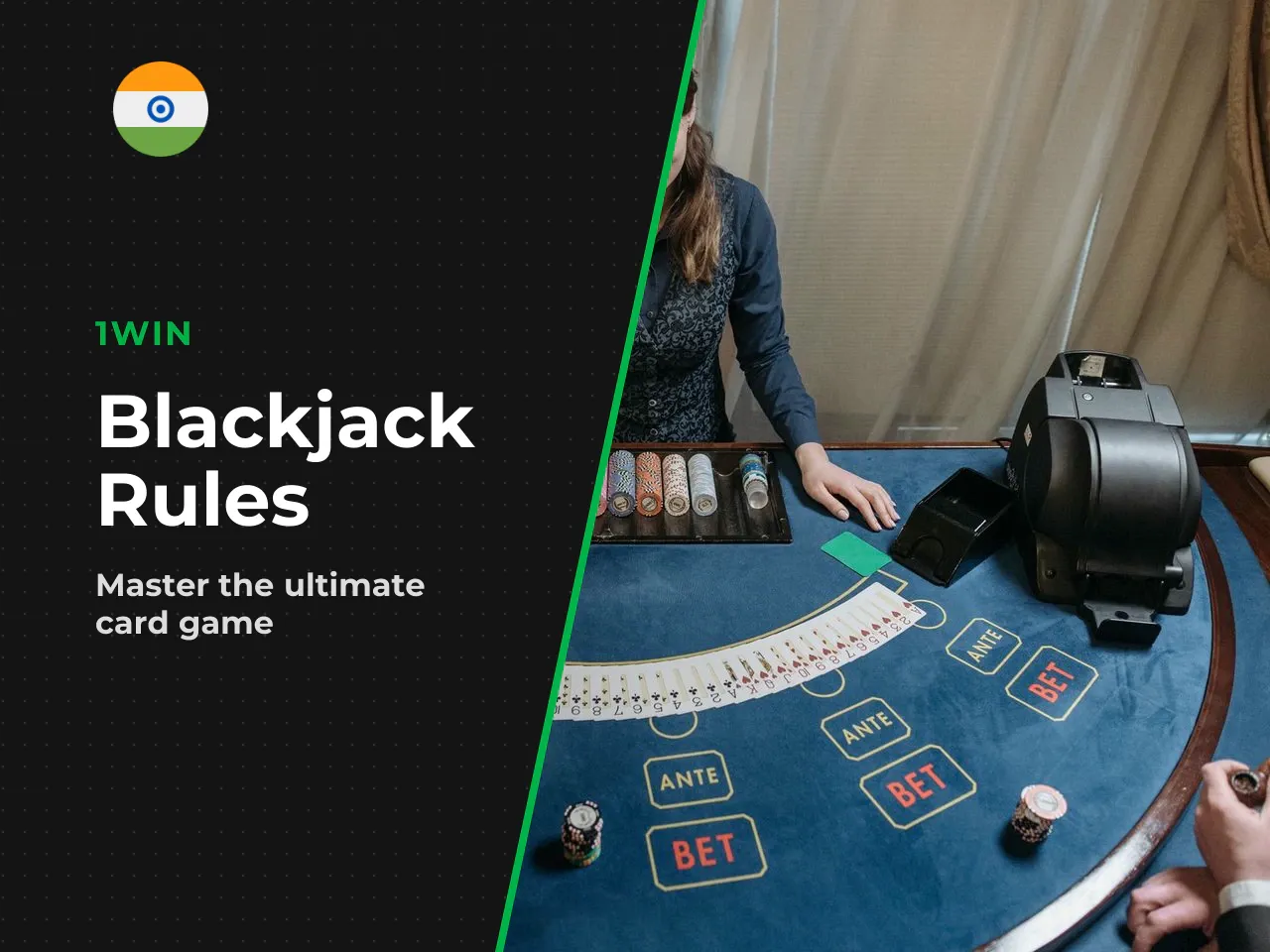
The target total is 21, but the direct goal is outscoring the dealer. A player hand wins if the total is higher than the dealer's valid hand, loses if it exceeds 21 (a bust), and pushes (ties) if both totals are equal. A "blackjack," also called a natural, is a special two-card result consisting of an Ace and a 10-value card. It usually awards a 3:2 payout instead of the standard 1:1, provided the dealer does not also hold one.
Worth noting: historical data shows blackjack became the dominant table game in US casinos by the 1960s after this enhanced payout was standardised. That single rule change significantly boosted player engagement and helped the game overtake craps in popularity.
What makes blackjack different from other card games
Blackjack games are popular because player decisions directly shift the expected mathematical outcome. Unlike baccarat, where choices barely alter the house edge (fixed at roughly 1.06 % on Banker), decision-based gameplay in blackjack interacts constantly with fixed dealer rules. Poor decisions can inflate the house advantage to around 2.0 %. That is a 2.5-percentage-point swing in expected value driven entirely by the quality of your choices rather than by chance.
The pace of play also differs greatly between formats. An algorithmic RNG online table deals up to 200-300 hands per hour, while a live format handles around 40-60. To put that in perspective, a deep-Q-network agent trained in simulation played millions of hands faster than a human dealer could complete a single session. The RNG experience really is that compressed.
Beginner tip - pace kills bankrolls: One new user lost their bankroll quickly by assuming live tables and RNG tables operated at the same speed. After switching to free demos and tracking how many hands they played per session, they realised RNG tables lacked any physical shuffling delay. Moving to live tables slowed their exposure and helped them maintain strict session limits.
- Blackjack:A two-card 21 (Ace plus a face card or 10) paying an enhanced return, or the name of the card game itself.
- Hand:The set of cards held by a player or dealer during a single round.
- Dealer:The casino representative acting strictly according to fixed platform rules.
- Player:The participant who places a bet against the house before the cards are dealt.
- Total:The numerical sum of the cards held.
- Bet:The initial wager placed, commonly available in INR for Indian users.
- Push:A tie where the player's and dealer's totals match, resulting in the return of the bet.
- Bust:Exceeding a hand value of 21, causing an automatic loss.
Blackjack rules: cards, values and dealer setup
A standard blackjack online configuration in 2026 uses 6 decks in a virtual shoe, dealing an initial two cards to the player and an up card plus a down card to the dealer. Some European platforms use 8 decks, but 6 decks remains the dominant global standard. These blackjack rules frame the entire probability matrix for the hand. Knowing the card values is, frankly, a mandatory baseline before placing an INR wager.
Card values for number cards, face cards and aces
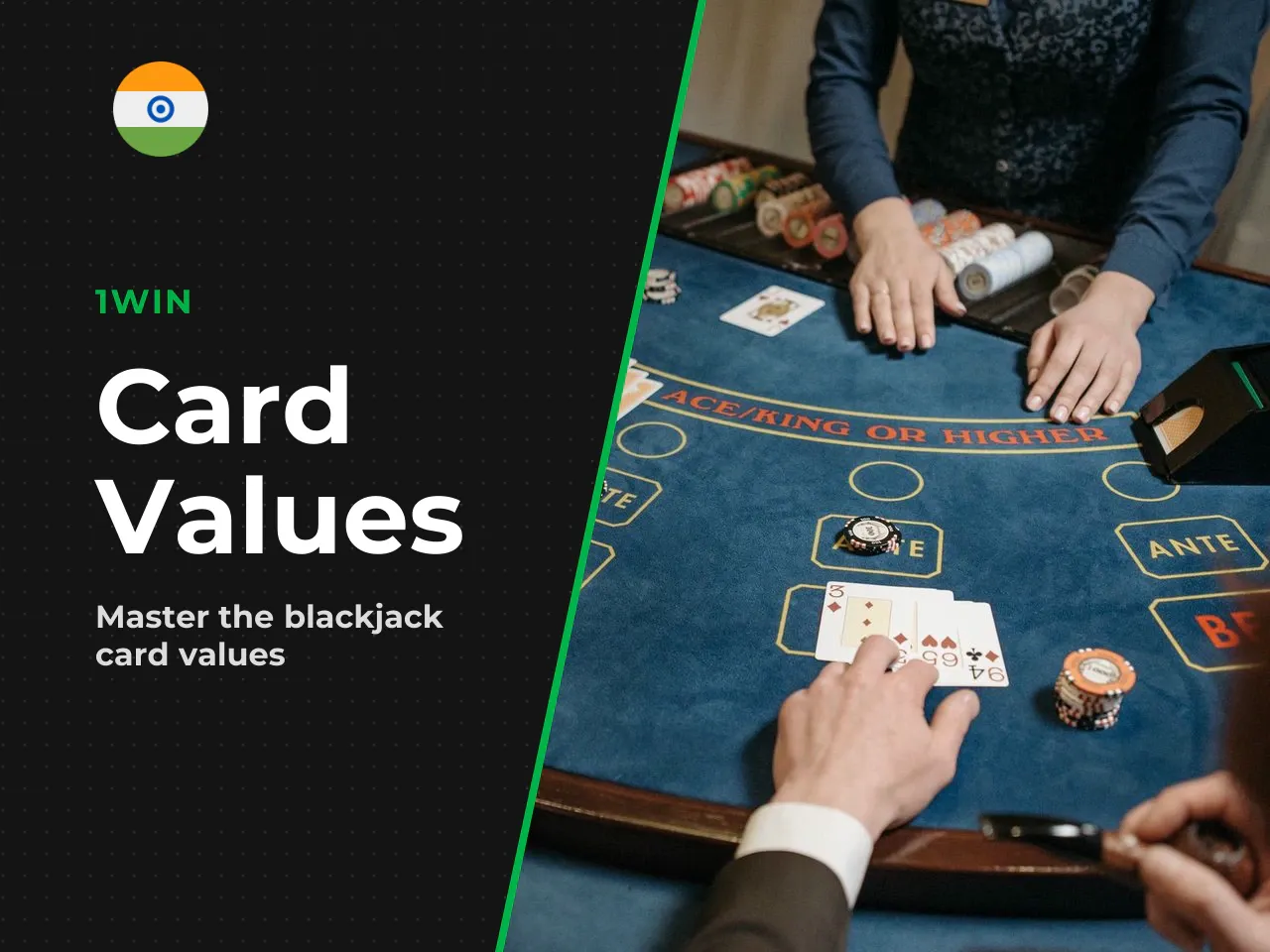
Each card is added to the hand total following a strict numerical mapping. Number cards retain their printed value. Every face card (Jack, Queen, King) equals 10. And an Ace carries a flexible value of either 1 or 11. This flexible Ace value creates "soft" hands. For example, Ace + 6 = soft 17, allowing you to draw another card without immediate risk of busting.
Soft hands carry a higher expected value than the corresponding hard totals because the Ace can be re-evaluated from 11 down to 1 whenever a new card would otherwise cause a bust. This dual nature is exactly why experienced players treat soft totals and hard totals very differently in their strategy decisions. If you remember only one thing about card values, let it be this: the Ace is your most flexible asset.
How the initial deal works with the dealer up card and down card
The first two cards are dealt face-up to the player, while the dealer reveals one visible card (the up card) and keeps the other concealed (the down card). The visible dealer card frames every hit, stand, and double choice because it signals the probability of the dealer busting. When the dealer shows a 4, 5, or 6, their bust probability rises to roughly 35-42 %. That is why basic strategy often advises standing on moderate totals against these weak up cards. The hidden dealer card remains locked until the player finishes all actions.
| Card Type | Nominal Ranks | Value in Blackjack | Example Two-Card Hand | Full Hand Total |
|---|---|---|---|---|
| Number cards | 2 through 10 | Face value (2-10) | 8 + 7 | 15 (Hard) |
| Face cards | Jack, Queen, King | 10 | King + 6 | 16 (Hard) |
| Aces (soft) | A | 11 (if sum ≤ 21) | Ace + 8 | 19 (Soft) |
| Aces (hard) | A | 1 (avoids busting) | Ace + 8 + 5 | 14 (Hard) |
| Blackjack | A + 10-value | 21 automatically | Ace + King | 21 (Natural) |
How to play blackjack step by step online
Playing online blackjack involves a strict loop: placing a bet, reading the initial cards, making strategic choices, and waiting for the dealer's automated turn to settle the hand. Learning how to play blackjack requires following this mechanical series without assuming any action will force a winning streak. No shortcut exists here.
Place your bet and receive two cards
The round starts by selecting your chip size and placing a bet before the countdown timer or RNG protocol initiates the deal. You receive two cards face-up, providing a first look at the player total against the lone dealer up card. Check the payout policies and bet sizing strictly against your set budget. A small detail many beginners overlook: some tables have minimum and maximum bet limits that vary widely, so confirm these before you sit down.
Decide whether to hit, stand, split or double down
Core player choices dictate the outcome flow. You take further cards or freeze your total exactly when prompted by the software. Your decisions change the hand and occasionally the bet size, carrying calculated levels of risk relative to the visible dealer up card. The strategy chart later in this guide gives you exact actions for every combination, so you do not need to guess.
How the dealer plays and how the hand is settled
A dealer never makes independent choices. They act after the player based on fixed rules, usually requiring them to hit on 16 and stand on 17. Some variants enforce "dealer hits soft 17," meaning the dealer must draw another card if their 17 includes an Ace valued at 11. The comparison of totals occurs instantly after the dealer stops drawing. Bust situations or payout outcomes are applied automatically to your account balance.
"Dealer hits soft 17 is a specific house rule in blackjack variants where the dealer must draw another card if their hand totals 17 with an Ace." - Playtech Standard Game Rules, 2022.
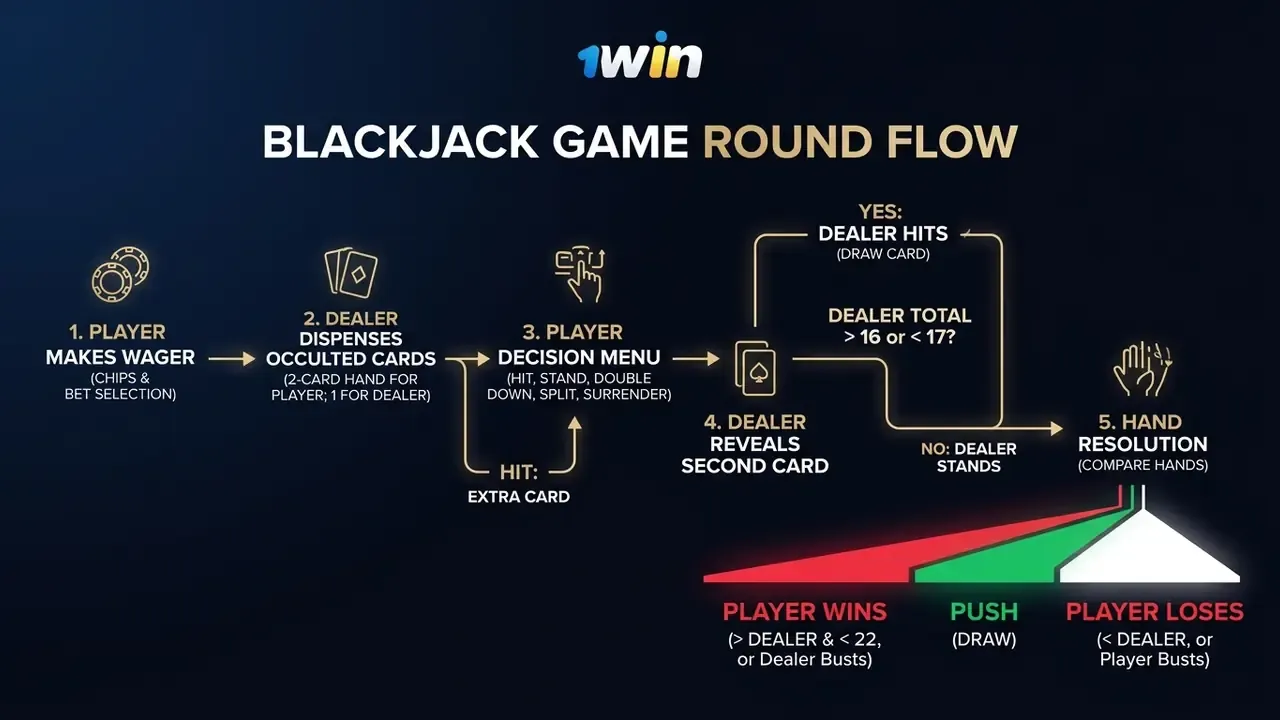
- Bet: User places initial chips.
- Two cards: Player and dealer cards distributed.
- Player decision: Selection of hit, stand, double, or split.
- Dealer play: Automated draws based on fixed 17-rule.
- Result: Comparison of totals for win, loss, or push.
What hit, stand, split, double down, insurance and surrender mean
These actions define the betting options and directly modify the long-term mathematical odds of any session. Understanding the meaning of hit and stand gives you control over your exposure, while understanding advanced inputs restricts poor spending habits when an offer looks superficially good.
A curriculum-learning study demonstrated that an agent optimising these decisions achieved a 47.41 % win rate versus 43.97 % for a baseline agent. That gap was driven entirely by decision quality, not luck.
"The curriculum-trained agent improved its win rate from 43.97 % to 47.41 % by learning optimal hit, stand, and double-down sequences in order of complexity." - "Learning to Play Blackjack: A Curriculum Learning Perspective," arXiv preprint, 2026.
Core decisions: hit, stand and double down
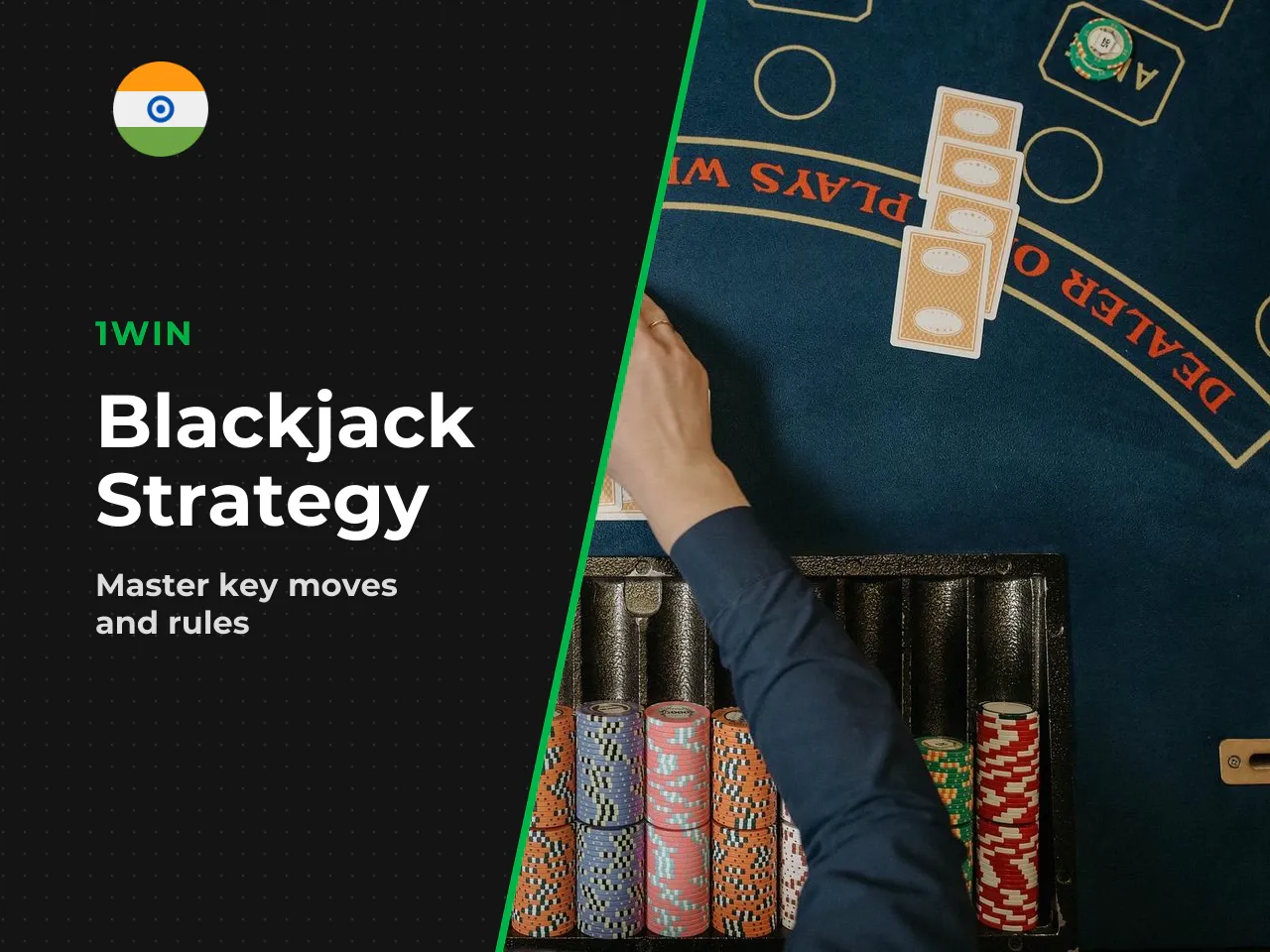
Taking another card is a "hit," while a "stand" locks your current total. A "double down" increases your initial bet by 100 % in exchange for receiving exclusively one more card. The decision to double heavily depends on the dealer up card, as it creates higher risk for a larger potential payout. Doubling on totals of 9-11 against a weak dealer card (2-6) is optimal because the dealer's bust probability in that range is approximately 40 %, confirmed by Monte Carlo simulations.
Here is a practical way to think about it: if the dealer is showing a 5 and you hold an 11, the math strongly favours doubling. You are essentially betting more when the odds tilt slightly in your direction. That said, "slightly" is the key word. The house still has an edge overall.
Advanced options: split, insurance and surrender
Splitting identical matching cards divides one hand into two separate starting positions, requiring a matching secondary bet. Splitting is most profitable against dealer up cards of 2-6, where the dealer's bust probability sits between 35 % and 42 %, increasing the player's win rate by 12-18 % per hand on correctly split pairs (such as 8-8 or A-A).
Insurance covers against dealer blackjacks but carries a strongly negative expected value. Insurance is profitable only under the card-counting condition RC ≥ 4·D + 1, where D is the number of remaining decks. That threshold is almost never reached in standard play. In practical terms, taking insurance without counting adds up to 7 % or more to the house edge, making it one of the worst side bets available. Note: the original figure of "+7.3 %" is within range for 6-8-deck shoes but varies by deck count; the precise impact reaches up to 7.4 % in multi-deck games.
Surrender allows you to forfeit a remarkably weak hand alongside 50 % of the active bet without exposing the rest. Late surrender on a 15 or 16 against a dealer 10 reduces long-term loss by 3-5 % on those specific hands. It feels counterintuitive to give up half your bet voluntarily, but the math supports it in these narrow situations.
Basic blackjack strategy for better decisions
Basic strategy logic represents a mathematical matrix designed to reduce the house edge to around 0.5 % during long-term play. Simulations confirm that perfect basic strategy yields an expected value of roughly -0.005 per ₹1 wagered under standard 6-deck, 3:2 payout rules.
"Across 10 million simulated hands, strict basic-strategy play held the house edge at 0.50 %, validating combinatorial-probability models first published by Edward Thorp." - Wizard of Odds, "Blackjack Strategy Analysis," 2024. wizardofodds.com
It relies on the relation between the player total and the dealer up card to control risk and standardises your choices instead of relying on gut feeling or streaks. And honestly, that shift from instinct to system is where most players see the biggest improvement.
How the dealer up card changes your play
Adapt your decisions based on the difference between strong and weak dealer cards. A dealer presenting a 4, 5, or 6 is grouped as statistically vulnerable to busting, making player stands viable on lower totals. A dealer showing 7 through Ace is considered strong, requiring more aggressive hitting. The visible card frames hit, stand, and double limits across all professional strategy charts.
Think of it this way: against a weak dealer card, you are waiting for the dealer to self-destruct. Against a strong one, you need to build a competitive total yourself.
Five essential rules every beginner should memorise
Rather than trying to learn the entire strategy chart at once, start with these five mathematically proven rules:
- Always hit when your hand totals 8 or lower. There is zero risk of busting with a single additional card.
- Stand on hard 17 or higher. The probability of improving is too low to justify the bust risk.
- Never split 4s, 5s, or 10s. Splitting these pairs rarely improves your odds and often destroys a strong starting position.
- Double down on 10 or 11 when the dealer shows a weak card (2-6). You exploit the dealer's high bust probability with a larger wager.
- If the dealer shows 7 or higher, do not stand on a hard 12-16. Hit instead, because the dealer is unlikely to bust and your current total is probably not enough to win.
Quick-reference basic strategy chart
Use this simplified chart for the most common situations. H = Hit, S = Stand, D = Double (hit if not allowed), SP = Split.
| Your Hand | Dealer 2-3 | Dealer 4-6 | Dealer 7-9 | Dealer 10 | Dealer A |
|---|---|---|---|---|---|
| 8 or less | H | H | H | H | H |
| 9 | H | D | H | H | H |
| 10 | D | D | D | H | H |
| 11 | D | D | D | D | H |
| 12 | H | S | H | H | H |
| 13-16 | S | S | H | H | H |
| 17+ | S | S | S | S | S |
| A-2 to A-6 | H | D | H | H | H |
| A-7 | S | S | S | H | H |
| 8-8 | SP | SP | SP | SP | SP |
| A-A | SP | SP | SP | SP | SP |
| 10-10 | S | S | S | S | S |
Save this chart to your phone and refer to it while playing free demo hands until the decisions become automatic.
Common mistakes new players make
New players often ignore card values, deploy poor betting choices, and chase losses following rapid busts. Using insurance without understanding it and overplaying weak hands systematically drain bankrolls. I should add: the most common mistake is not having a stop-loss limit before you start.
"Online casino players systematically increase bet sizes after losses, accelerating bankroll depletion, a pattern known as between-session loss-chasing." - Zhang et al., "Between-session chasing of losses and wins in online e-casino," Greo Evidence Centre, 2024.
Expert tip - drop the insurance habit: A player consistently lost funds by taking insurance on every hand, assuming it protected their bet. An analysis based on the Edward Thorp model showed that without card counting, insurance has a negative expected value. By removing the insurance bet from their routine, the player reduced the house edge against their sessions significantly.
Fact check: evaluating blackjack myths
- Myth:"Blackjack is pure luck."
- Fact:The game has a fixed house edge of 0.5 % with optimal play due to combinatorial probability, meaning strategic choices directly affect expected value.
- Myth:"Insurance always helps protect the bankroll."
- Fact:Betting insurance without card tracking increases expected loss rates by 5-7 % per unit depending on deck count.
- Myth:"Free blackjack and real-money blackjack RNG behave differently."
- Fact:Certified RNG algorithms in demo and paid modes produce identical random outputs. Reputable platforms undergo independent audits (e.g., by eCOGRA or GLI) to verify this parity.
Popular online blackjack variants
Beyond classic blackjack, online casinos offer a range of rule variations that change the house edge, pace, and strategic approach. Here are four widely available types you will encounter:
European Blackjack. The dealer receives only one face-up card initially; the hole card is not dealt until the player completes all actions. This removes the possibility of an early dealer blackjack check. Typically played with 2 decks, European Blackjack has a house edge of roughly 0.39 % with optimal strategy. It is a good starting point if you prefer fewer decks and a slightly slower rhythm.
Atlantic City Blackjack. Played with 8 decks, it allows late surrender and doubling after a split. These are generous rules that keep the house edge around 0.36 %. The dealer stands on all 17s, including soft 17.
Vegas Strip Blackjack. Uses 4 decks and allows the dealer to peek for blackjack. Doubling after splitting is permitted, and the dealer stands on soft 17. House edge sits near 0.35 % under perfect play, making it one of the most player-friendly variants on paper.
Multi-Hand Blackjack. Lets a single player control 3-5 hands simultaneously. The rules usually mirror classic blackjack, but the multi-hand format increases variance and demands stronger bankroll discipline because you wager on several outcomes each round. If your budget is tight, this format can burn through it faster than you expect.
Each variant has slightly different optimal strategy adjustments. Always review the specific rule summary displayed at the table before you play. Small differences like "dealer hits soft 17" can shift the house edge by 0.2 % or more.
Free blackjack, blackjack demo and why practice helps
A free blackjack mode acts strictly as a low-pressure environment for checking mechanics before putting real funds at risk. The main difference between free online blackjack and standard online play rests heavily on psychological elements. The lack of financial failure lets you test basic strategies smoothly. Play online blackjack in demo mode to understand limits before you proceed to deposits.
Disclaimer: Free-play modes are valuable for learning rules, but they do not replicate the emotional pressure of risking real money. Research indicates that online gambling is associated with higher rates of problem-gambling symptoms than visiting physical casinos. If you notice signs of compulsive play, even in demo mode, please seek guidance from a responsible-gambling support service.
"A study linked to UNLV found that online gambling is associated with higher levels of problem-gambling symptoms than physical casino attendance, underscoring the importance of self-awareness even during demo play." - UNLV news release, "New Study Shows Online Gambling More Addictive than Casino Gambling," 2023-2024.
What you learn faster in free online blackjack
Training card values, the basic pace of a hand, and hit-or-stand timing happens significantly faster without financial stress. Reading the dealer up card correctly and applying complex split mechanics builds competence before entering real-money modes. Specifically, demo sessions help form four key skills:
- Rapid card evaluation - processing two-card totals instantly.
- Accurate point counting - practising soft-vs-hard hand sums under no pressure.
- Decision timing - testing hit/stand/double/split choices and seeing results without monetary consequences.
- Pace awareness - understanding how quickly RNG tables cycle through hands compared to live tables.
There is something else worth mentioning. Demo play also lets you test the platform itself: how the interface loads on your phone, whether the buttons are responsive, and how clearly the game displays card values. These practical details matter more than most guides acknowledge.
When to move from demo to full online blackjack
Move forward only when you possess a stable understanding of the rules and strict comfort with standard decisions. That means you can apply the basic strategy chart from memory for most common hands. Set a clear walk-away point and test the platform's deposit caps via a reliable payment method holding your INR budget securely.
Be aware that social-casino and free-play environments can normalise high-frequency play, forming habits that carry over into real-money sessions. Responsible gambling begins with honest self-assessment: if you find yourself playing demos for hours on end without breaks, treat it as an early warning sign.
"Free-to-play casino games may normalise high-intensity gambling behaviour, creating patterns that transfer into real-money wagering." - "The Rise of Social Casino Games: Gambling or Entertainment?", academic review, 2023.
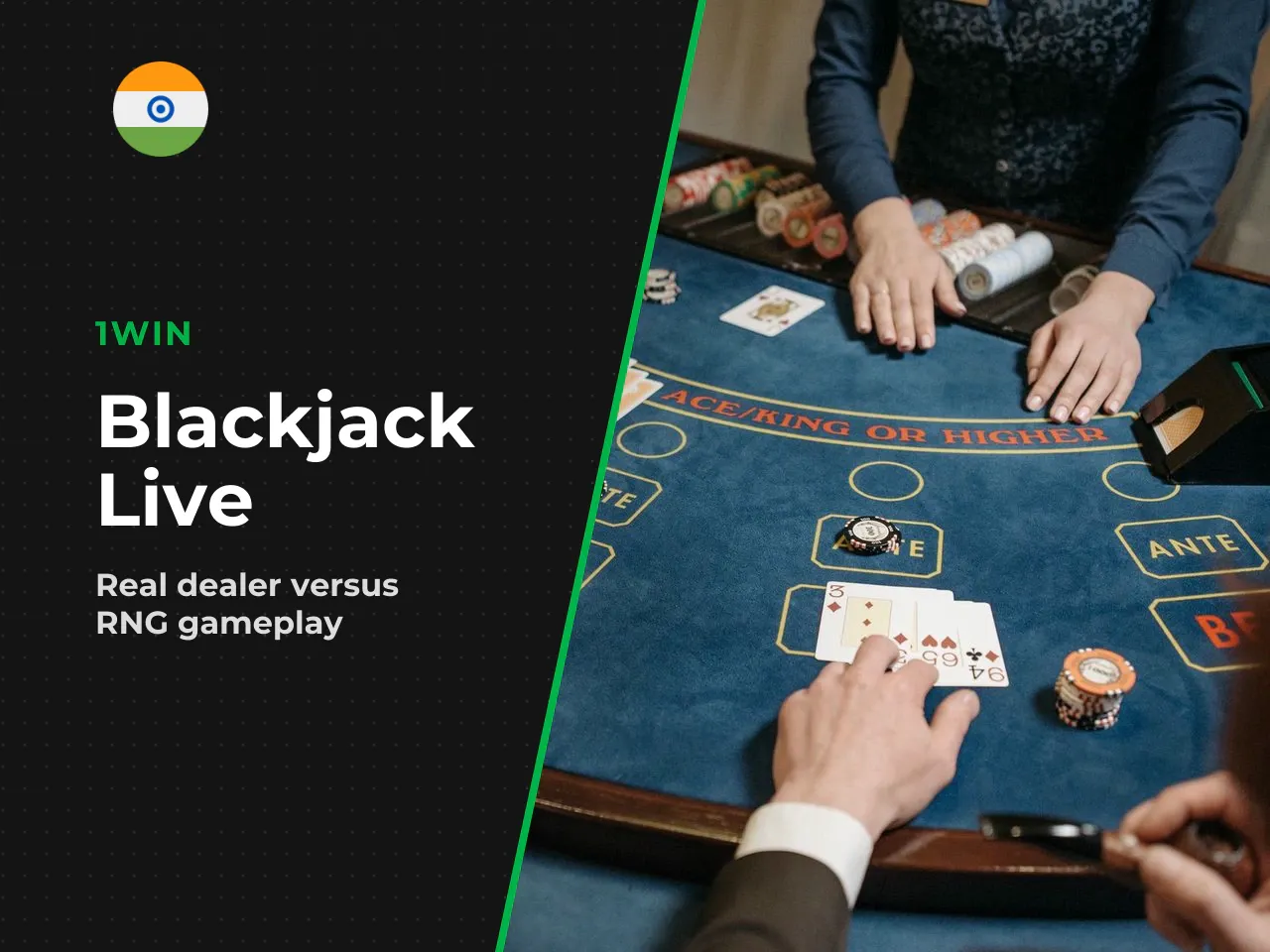
Live blackjack vs standard online blackjack
Live blackjack utilises human dealers and real-time streaming, creating a slower, table-like atmosphere opposed to the rapid RNG-based online blackjack game. Comparisons highlight stark pace and interface differences: live play processes 40 to 60 hands per hour, whereas automated games handle 200-300.
The higher speed and solitary nature of RNG play have behavioural implications. Research from Morgan State University's study on interactive gaming found that the rapid pace and lack of social cues in automated formats are associated with a higher risk of problem-gambling behaviour compared to live-dealer tables. Something to keep in mind when choosing your format.
Who live blackjack suits best
Players who want a real-table feel and a slower pace for careful observation usually prefer the live dealer format. The primary live-casino demographic is males aged 25-44 with mid-to-high disposable income who value social engagement and human dealer interaction. Sessions on live tables average 2.5x longer than RNG sessions, suggesting deeper strategic engagement. The visibility of dealer actions creates comfort for learning table flow, contrasting with the rapid automated action preferred by high-volume players.
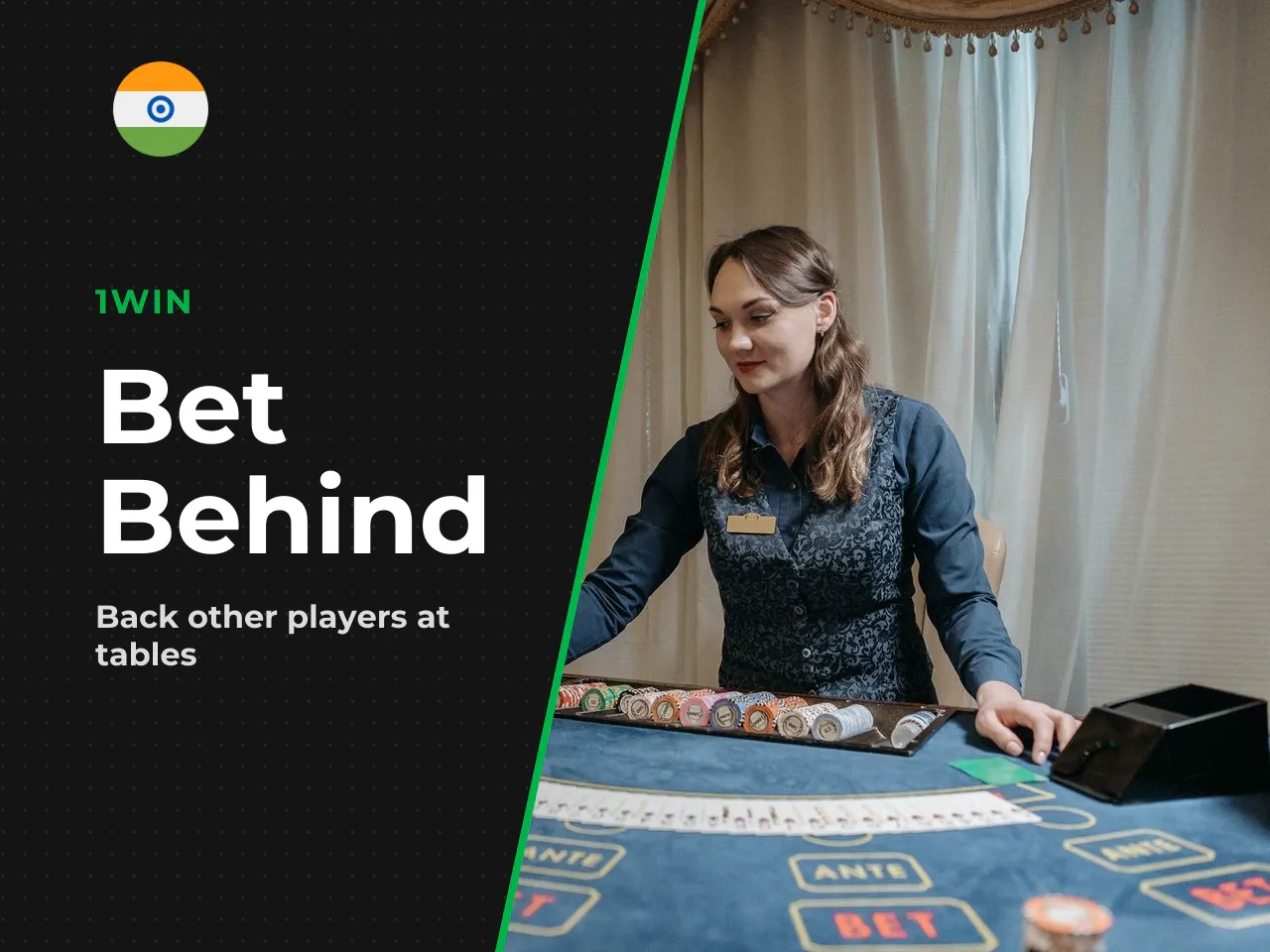
The Bet Behind feature at live tables
Busy live tables sometimes have all seven seats occupied, but you can still participate using Bet Behind. This feature lets you wager on a seated player's hand while you wait for your own seat. A virtually limitless number of players can bet behind each seat, making it possible to join the action even at the most popular tables.
It is actually a good way for newer players to observe how experienced participants make decisions, while still having money riding on the outcome. That adds a real element of engagement without the full pressure of controlling the hand yourself. Just remember: you are trusting someone else's strategy when you bet behind, so watch a few rounds before committing.
How to choose a blackjack casino or blackjack online casino
Before depositing real funds, verify the operator's licence status and read the full terms for withdrawals, wagering requirements, and identity verification.
Selecting a secure platform depends on verifying transparency of rules, active game selection, and access to free blackjack modes. Finding a reliable online casino requires checking trust signals, India-specific payment availability like UPI and NetBanking, and active regulatory status before depositing any funds. Tracking player behaviour across iGaming market trends has consistently highlighted that transparent rules matter far more than oversized sign-up bonuses.
Licensed operators also tend to offer better player-protection tools. The UK Gambling Commission's data series on consumer behaviour shows that players who choose regulated casinos use responsible-gambling features, such as deposit limits and self-exclusion, significantly more often than those at unlicensed sites.
A note on legality and KYC for Indian players
Online gambling regulation in India is governed at the state level. While many states permit games of skill, several, including Andhra Pradesh, Telangana, and Tamil Nadu, have enacted restrictions that may cover online casino games. Always verify the legal position in your specific state before depositing.
Most international casinos serving Indian players require KYC (Know Your Customer) verification before processing withdrawals. Expect to submit:
- A government-issued photo ID (PAN card or Aadhaar).
- Proof of address (utility bill or bank statement).
- Verification of the payment method (UPI-linked bank account or e-wallet screenshot).
Withdrawal timelines through UPI typically range from 24 to 72 hours after KYC approval. Some operators charge a small processing fee on withdrawals below a certain threshold. Confirm these details in the casino's terms before you deposit. It is a step many players skip, and it is almost always the source of frustration later.
Additionally, winnings from online gambling in India are taxable under Section 115BB of the Income Tax Act at a flat rate of 30 % (plus applicable cess). Maintain records of deposits, withdrawals, and net results for tax-filing purposes.
| Comparison Checklist | Why It Matters for Players in India | Red Flag Indicator |
|---|---|---|
| Clear Terms and Policies | Prevents payout blocks during KYC completion. | Hidden withdrawal limits and missing wagering multipliers. |
| Free Blackjack Availability | Allows risk-free testing of the digital interface. | Forcing deposits immediately upon registration. |
| Live Dealer Table Variety | Gives access to slower play and genuine tables. | Streams crashing frequently or lacking English/Hindi support. |
| Mobile UX and Loading Speed | India operates primarily as a mobile-first market. | Apps draining battery or resetting rounds unexpectedly. |
| Active Licence Displayed | Confirms regulatory oversight and dispute resolution. | No licence number or link to the regulator's public register. |
Author Profile: Nisha Rao is an editor specialising in India-focused casino compliance rules and betting mechanics. Focusing on E-E-A-T and consumer safety, she constructs guides highlighting practical trust checks, bankroll thresholds, and factual analyses of RNG operations based strictly on authoritative frameworks.
FAQ about blackjack online and free play
Respuestas renderizadas en formato acorde al diseГ±o exportado: tarjetas oscuras, acento dorado y despliegue compacto.
1 Can beginners start with free blackjack before playing online?
Can beginners start with free blackjack before playing online?
Yes. Taking a demo-first approach supports learning rules and strategic decisions while completely omitting financial risk. Learning the payout conditions in a free format builds safer, evidence-backed habits before engaging with full platforms. Experts caution, however, that demo play does not replicate the emotional pressure of real-money sessions. The Journal of Behavioral Addictions (2025) found that players in free modes take significantly riskier decisions than they would with real stakes.
2 What is a soft 17?
What is a soft 17?
A soft 17 is any hand totaling 17 that includes an Ace valued at 11, for example, Ace + 6. Because the Ace can also count as 1, a soft 17 can be safely hit without the same bust risk as a hard 17. Some house rules require the dealer to hit on soft 17 (labelled "H17"), which slightly raises the house edge by about 0.2 %.
3 Does card counting work in online blackjack?
Does card counting work in online blackjack?
In physical casinos, systems like the Hi-Lo method can shift the edge in the player's favour. The basic process: assign +1 to low cards (2-6), 0 to neutral cards (7-9), and -1 to high cards (10-A); maintain a running count; divide by the estimated number of remaining decks to get the "true count"; and raise bets when the true count is high. However, online RNG blackjack shuffles the virtual deck after every hand, making card counting mathematically impossible. Live-dealer online games use 6-8 decks with frequent shuffles or continuous-shuffling machines, which also neutralise counting.
4 Can I play blackjack online in Indian Rupees?
Can I play blackjack online in Indian Rupees?
Yes. Many international online casinos accept INR deposits via UPI, NetBanking, Paytm, and popular e-wallets. Always check that the platform displays prices in ₹ and that there are no hidden currency-conversion fees. A quick test: make a small deposit first and verify the amount matches what your bank debited.
5 Do I pay taxes on blackjack winnings in India?
Do I pay taxes on blackjack winnings in India?
Under Section 115BB of the Income Tax Act, winnings from gambling are taxed at 30 % (plus applicable cess). The casino may deduct TDS at source on larger payouts. Keep detailed records of all deposits and withdrawals for filing purposes.
6 What is the best blackjack variant for beginners?
What is the best blackjack variant for beginners?
Classic 6-deck blackjack with "dealer stands on all 17s" and a 3:2 natural payout is the most beginner-friendly format. The rules are widely documented, and most free-demo versions mirror this setup, making it easy to practise with the basic strategy chart above. Once you feel comfortable, you can explore variants like European Blackjack or Atlantic City Blackjack for slightly different rule sets.
What to do next: Open a free demo table at a licensed casino, pull up the basic strategy chart on your phone, and play 50 practice hands. Once you can make the correct decision without checking the chart on most hands, you are ready to consider real-money play, with a strict session budget and deposit limit already in place.